Title: Addressing the Critical Water Shortage at UDS Nyankpala Campus
The University for Development Studies (UDS), Nyankpala Campus, is currently grappling with a severe water crisis that is severely impacting students’ daily lives, health, and academic pursuits. The scarcity of clean, potable water has created untenable conditions, compromising basic hygiene, giving rise to health concerns, and exacerbating stress levels among the student body. This situation underscores the urgent need for sustainable water management and significant infrastructure development to safeguard student well-being.
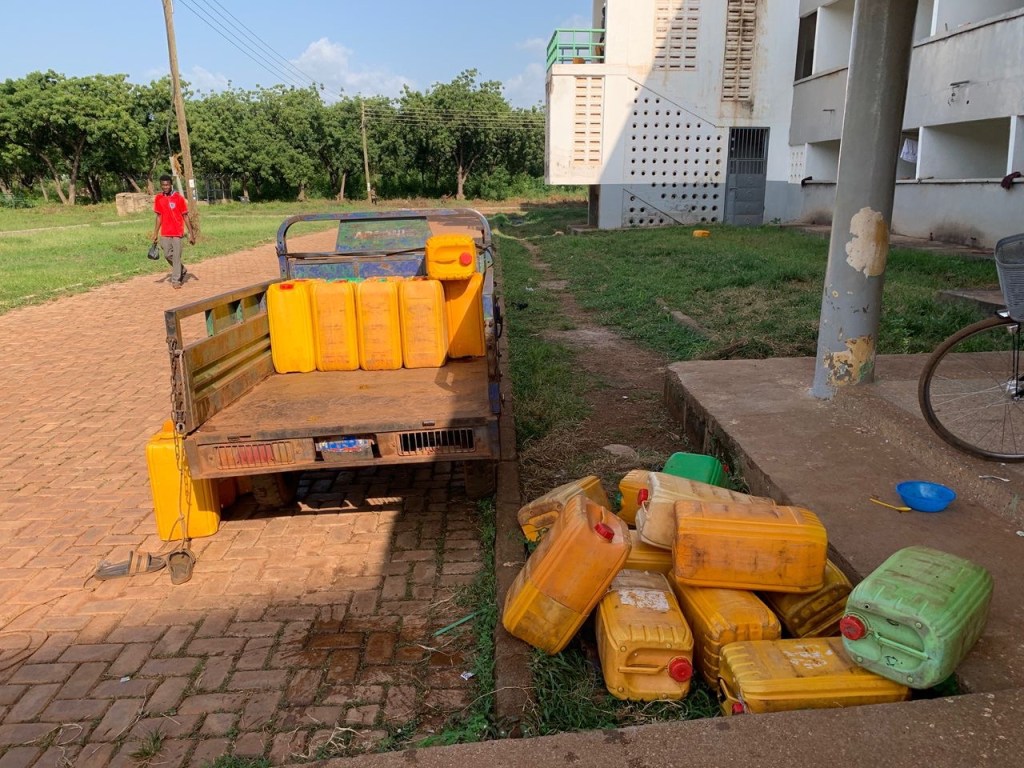
The crisis has forced students into a difficult position. As Level 100 student Abdul Aziz Salam reports, they are compelled to purchase water daily at a significant personal cost of three cedis per gallon. This recurring expense places a considerable financial strain on their limited resources. Compounding the economic burden are serious concerns about the safety of this vended water, with its source and cleanliness being highly questionable.
Again , Level 400 student Ebenezer Awuku also confirmed that the limited water supply provided by the school is insufficient for basic domestic needs. This inadequacy leaves students with no choice but to turn to the expensive and potentially unsafe private market. He joined his colleague in raising alarms over the quality of the water, which is often visibly unclean.
In light of these challenges, the student body, through Ebenezer Awuku, urgently appeals to the university authorities to intervene. The primary request is for the provision of a reliable and sufficient supply of clean, potable water to alleviate this pressing burden and ensure a conducive living and learning environment for all students.
The University for Development Studies (UDS), Nyankpala Campus, is currently grappling with a severe water crisis that is severely impacting students’ daily lives, health, and academic pursuits. The scarcity of clean, potable water has created untenable conditions, compromising basic hygiene, giving rise to health concerns, and exacerbating stress levels among the student body. This situation underscores the urgent need for sustainable water management and significant infrastructure development to safeguard student well-being.
The crisis has forced students into a difficult position. As Level 100 student Abdul Aziz Salam reports, they are compelled to purchase water daily at a significant personal cost of three cedis per gallon. This recurring expense places a considerable financial strain on their limited resources. Compounding the economic burden are serious concerns about the safety of this vended water, with its source and cleanliness being highly questionable.
Again , Level 400 student Ebenezer Awuku also confirmed that the limited water supply provided by the school is insufficient for basic domestic needs. This inadequacy leaves students with no choice but to turn to the expensive and potentially unsafe private market. He joined his colleague in raising alarms over the quality of the water, which is often visibly unclean.
In light of these challenges, the student body, through Ebenezer Awuku, urgently appeals to the university authorities to intervene. The primary request is for the provision of a reliable and sufficient supply of clean, potable water to alleviate this pressing burden and ensure a conducive living and learning environment for all students.
 Site Title